
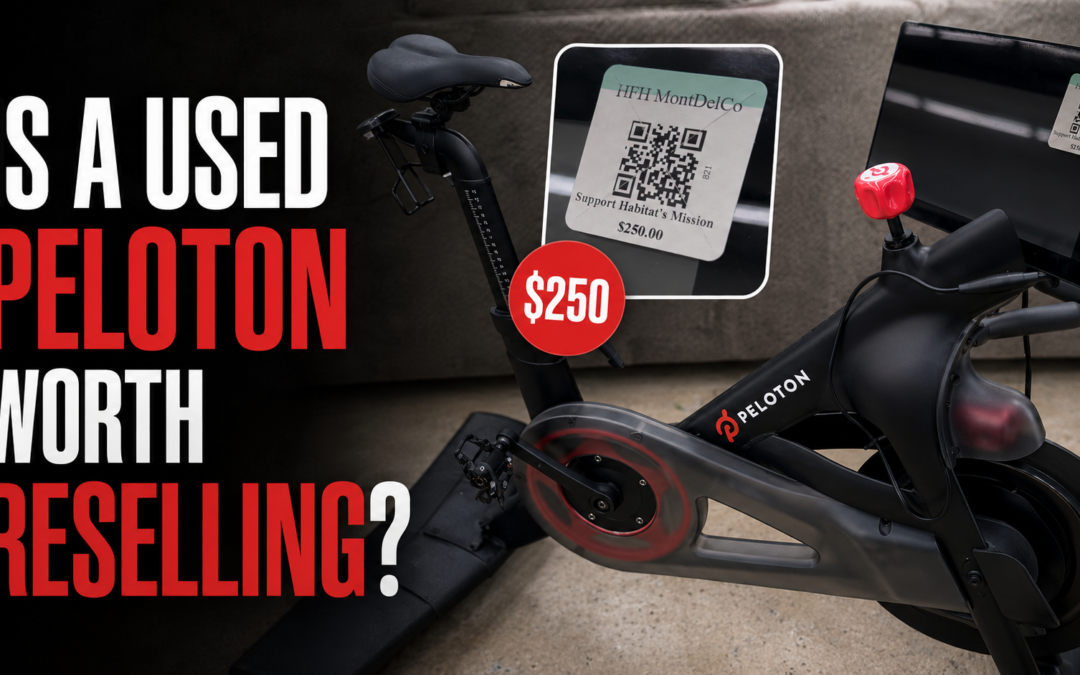
I recently spotted a Peloton bike for $250 at a local Habitat for Humanity ReStore. At first glance, it seemed like it could be a great resale opportunity. Peloton bikes originally sold for around $1,500 or more, so finding one at a thrift store for a fraction of that price certainly gets your attention.
But an expensive original price does not always translate into strong resale value. Before buying it, I checked Facebook Marketplace to see what similar Peloton bikes were actually selling for. I found some older, first-generation models listed for as little as $100, along with plenty of other used Pelotons competing for buyers. That was enough to make me reconsider the flip.
Why Are Used Peloton Bikes So Cheap?
Peloton became extremely popular when more people were exercising at home. Since then, many owners have stopped using their bikes and decided to sell them. Unfortunately for resellers, that has created a crowded secondhand market.
These bikes are also large, heavy and difficult to transport. A buyer usually needs a truck, SUV or van, plus someone to help move it. That limits the number of potential buyers and makes shipping impractical for most casual resellers.
There is also the cost of Peloton’s membership to consider. The bike can still provide some basic functionality without a paid membership, but much of the experience people associate with Peloton comes from its classes, performance tracking and connected features. A potential buyer may hesitate once the ongoing subscription cost is added to the purchase price.
Older Peloton Screens Can Be a Risk
Some of the inexpensive Pelotons I found while searching Marketplace appeared to be older, first-generation models, which introduced another concern: the tablet. Some owners of older Peloton bikes report screens that no longer turn on or other computer-related problems. Even if the bike itself is mechanically sound, a bad touchscreen can turn an apparent bargain into an expensive repair project.
Before purchasing a used Peloton, I would want to confirm that it powers on, connects to Wi-Fi, responds properly to touch and completes a workout without shutting down. I would also inspect the frame, pedals, resistance knob and belt for signs of damage or heavy wear.
Could You Make More Money Selling It for Parts?
Parting out a Peloton may offer more potential than selling the complete bike, especially if the purchase price is low. The screen, pedals, seat, resistance components and other replacement parts may have value to current owners.
However, that approach requires more time, research and storage space. You could also be left with a very heavy frame that is difficult to sell or dispose of. At a $250 purchase price, there may not be enough room for the trouble unless the bike includes newer or particularly valuable components.
What Would Be a Good Reseller Purchase Price?
Based on the crowded local market, I would want to buy an older Peloton for substantially less than $250 before considering it as a flip. The exact number would depend on local demand and the bike’s condition, but a reseller needs enough margin to account for transportation, testing, cleaning, possible repairs and price negotiations.
The bigger lesson is that retail price should never be confused with resale value. What matters is what comparable items are actually selling for in your area, not what they originally cost or what other sellers are hoping to get.
My Verdict: I Left It Behind
The Peloton at the ReStore was tempting, but I decided it was not worth the risk at $250. Between the saturated Marketplace listings, the possibility of an aging tablet and the challenge of moving such a heavy item, the potential profit did not justify the effort.
Maybe there is still money to be made if you find one extremely cheap, know how to repair it or already have a buyer lined up. Otherwise, an older Peloton may be more likely to become an expensive clothing rack than a profitable resale find.
Would you take a chance on reselling a used Peloton, and what is the most you would pay for one?