The penny may be on its way out, but that doesn’t mean all those pennies sitting in jars, cash registers, cupholders, and couch cushions suddenly disappear.
What’s more interesting is what happens when you actually pay with cash and a store doesn’t have pennies to give you as change.
I recently tested this out at a self-checkout, and I discovered something unexpected: depending on the store’s rounding policy, you can actually come out a few cents ahead.
I Actually Got 3 Cents for Free
During one transaction, I intentionally experimented with the machine to see how it would handle pennies and nickels.
I still owed 8 cents, so I put in a penny. The machine accepted it normally, bringing my balance down to 7 cents.
Then I inserted a nickel.
Now I owed just 2 cents.
Here’s where things got interesting.
I put another nickel into the machine to cover the remaining 2 cents. Normally, you’d expect to receive 3 cents back.
Instead, the machine gave me a nickel back.
I paid 5 cents toward a 2-cent balance and received 5 cents in change.
In other words, I effectively got 3 cents for free.
It’s obviously not going to fund my retirement, but it shows one of the strange consequences of trying to conduct cash transactions without relying on pennies.
Why Are Stores Rounding Cash Transactions?
With new pennies no longer being produced, existing pennies don’t suddenly become worthless. You can still encounter them in circulation and, as my experiment demonstrated, stores may still accept them.
The problem is supply.
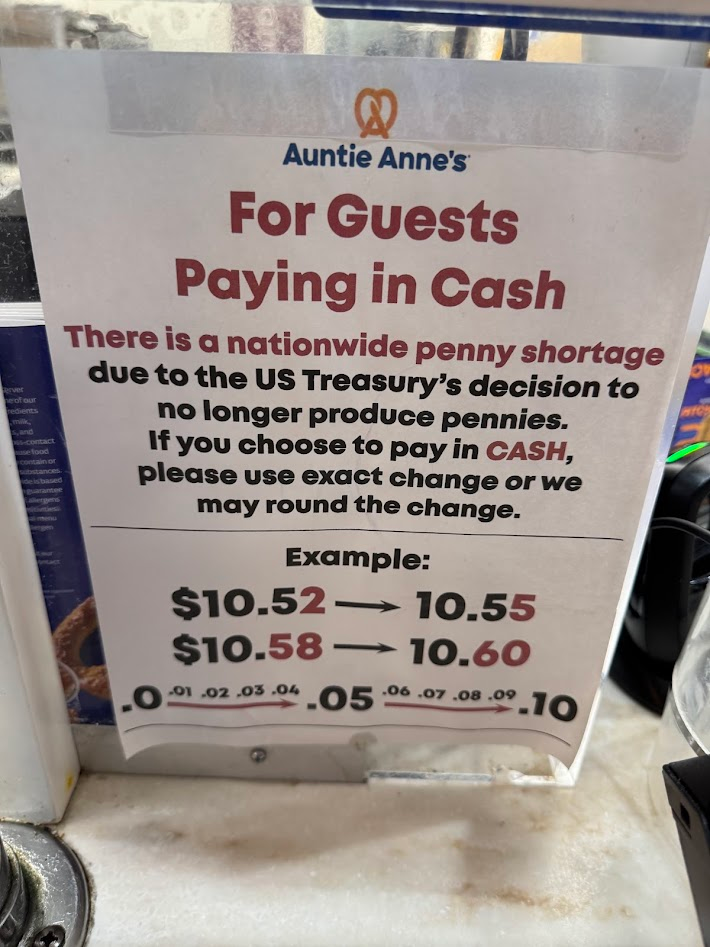
As fewer pennies are available to businesses, retailers need a practical way to handle cash totals that don't end in a 0 or 5.
That means cash rounding.
Instead of handing customers one, two, three, or four pennies in change, a retailer can adjust the final cash amount to the nearest amount it can reasonably settle using nickels.
And stores aren't necessarily handling this the same way.
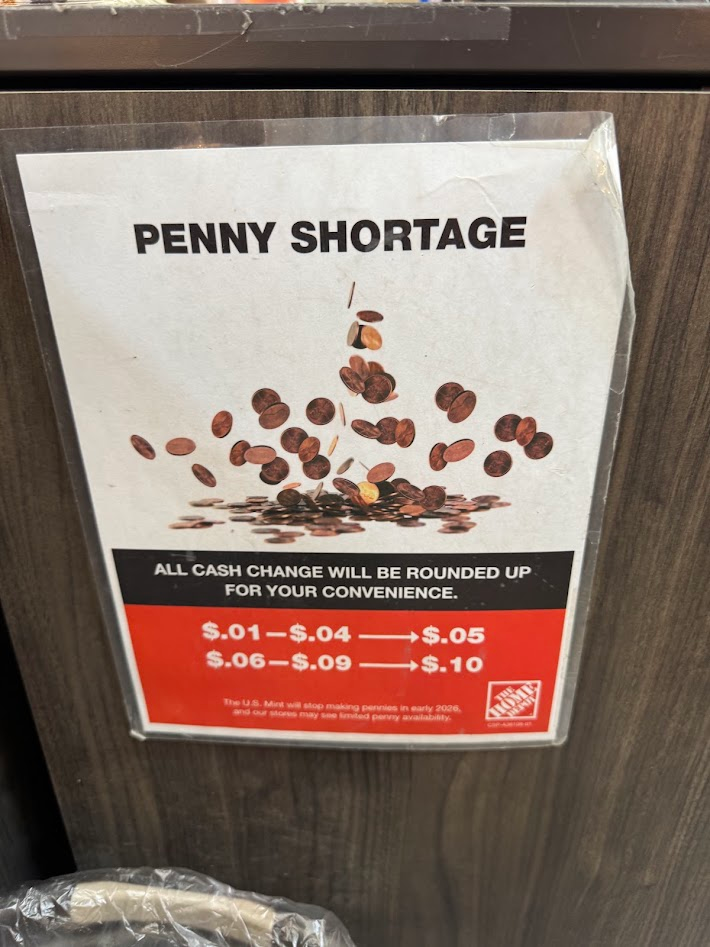
Some Stores Are Making Sure the Customer Wins
After my experiment, I went to the customer service desk and found a sign explaining the store's policy.
Their approach was surprisingly generous. Essentially, certain amounts were being rounded in the customer's favor rather than requiring exact change.
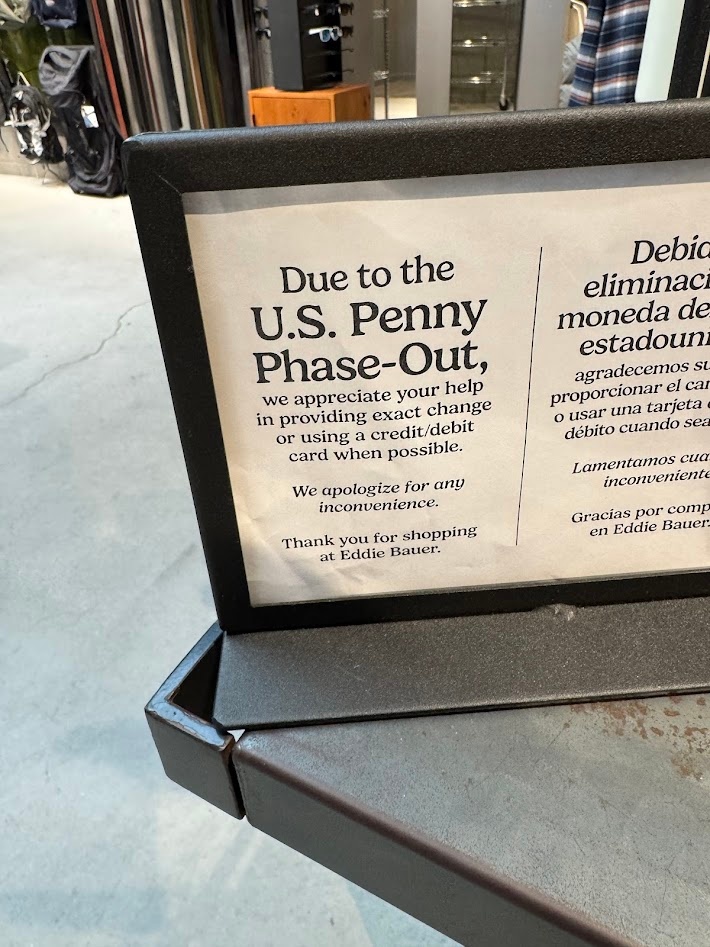
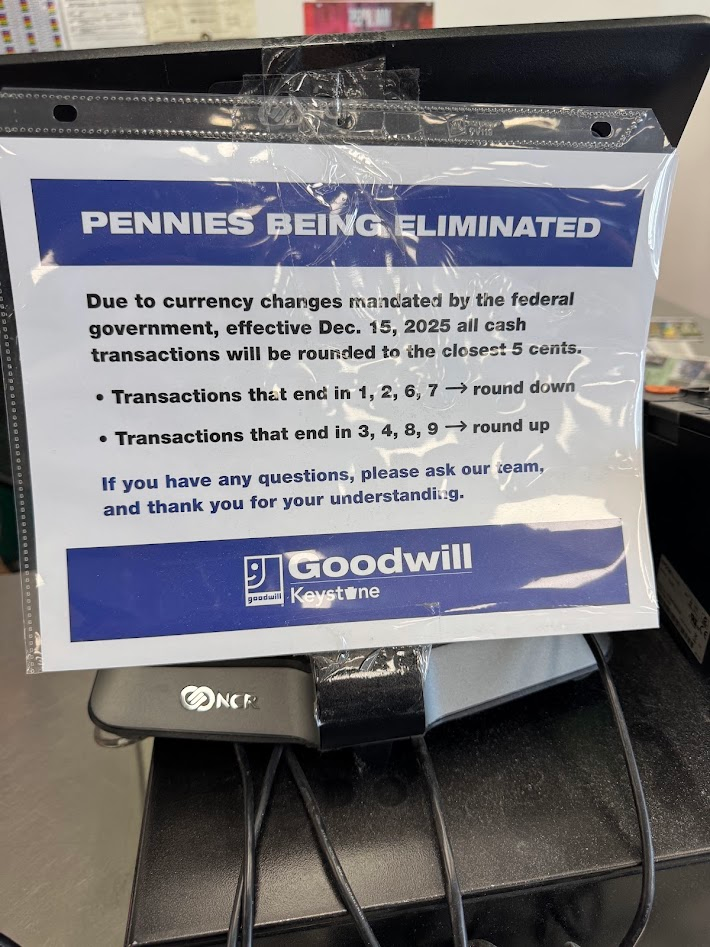
I’ve also started noticing signs explaining penny policies at other retailers, including Eddie Bauer before that particular location closed and Goodwill.
Goodwill had a more detailed policy based on the final digit of the transaction.
But the simplest policy I’ve seen came from Chick-fil-A.
Their sign essentially explained that affected cash transactions would be rounded down to the nearest nickel.
That's about as straightforward as it gets. Instead of worrying about whether the customer gains or loses a couple of cents depending on the transaction, rounding down means the customer benefits.
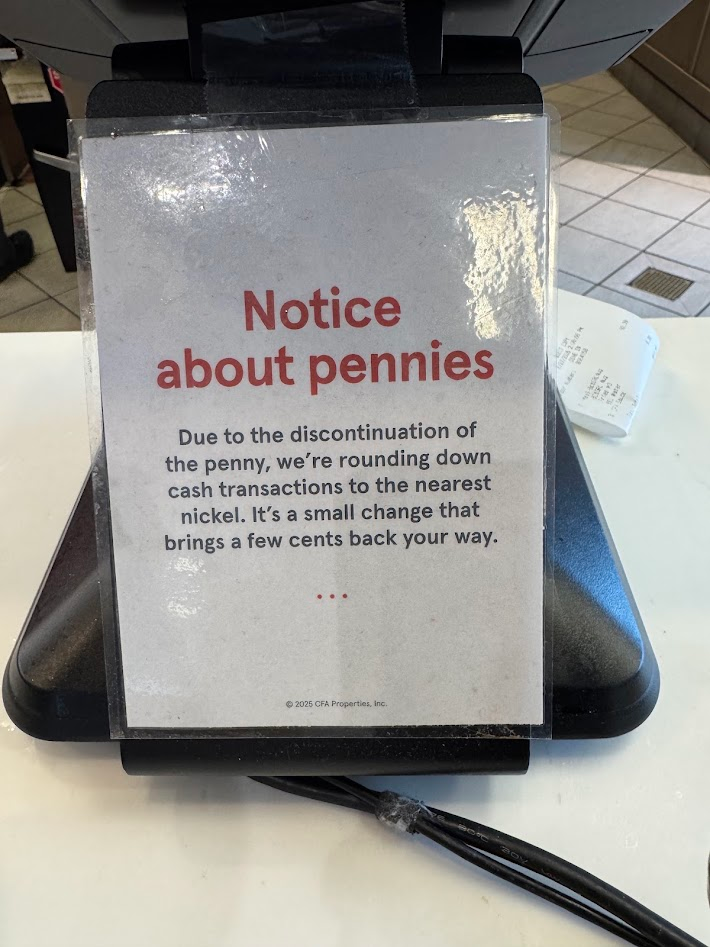
Are Pennies Still Legal to Spend?
Yes. Stopping the production of new pennies doesn't make the pennies already in circulation disappear overnight.
There are still huge numbers of them out there.
People can continue spending pennies, and businesses can continue accepting them. Over time, though, fewer pennies may circulate as people hold onto them, lose them, collect them, or simply leave them sitting in jars at home.
That's why this transition could take quite a while.
You might still see pennies for years while simultaneously encountering businesses that have already adopted cash-rounding policies.
Does Rounding Affect Credit and Debit Card Purchases?
This is an important distinction.
The penny problem is fundamentally about physical cash. Electronic transactions can still be processed to the exact cent because nobody needs to physically hand you three pennies.
If your purchase is $10.02 and you pay electronically, the system can simply charge $10.02.
It's when you hand over physical cash that things get interesting.
The End of the Penny Could Make Paying With Cash a Little Weird
For most purchases, we're talking about a difference of only a few cents.
But it's fascinating to watch an everyday part of American life change in real time.
The penny has been around for generations, so people naturally assume that if something costs $9.97, they'll always be able to pay exactly $9.97 in cash and receive exact change.
As pennies become harder for retailers to obtain, that assumption starts to break down.
And occasionally, you might even find yourself owing 2 cents, putting in a nickel…and getting the entire nickel handed right back to you.
Three free cents. I'll take it.